How long will it take GWB to reference September 11 in tonight’s State of the Union address? I’m taking 13 minutes in the pool, and putting the over/under mark at 17:40.
Month: January 2006
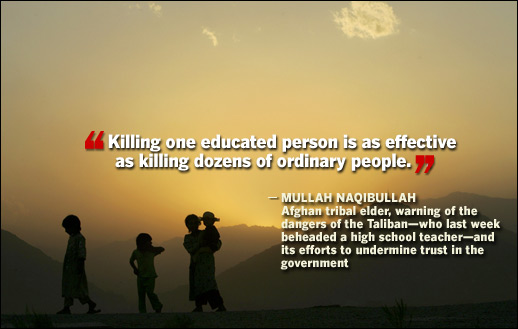
“Cut off the head” means so many different things
Risk taking as a function of ability to do the math
Would You Take the Bird in the Hand, or a 75% Chance at the Two in the Bush? – New York Times:
WOULD you rather have $1,000 for sure or a 90 percent chance of $5,000? A guaranteed $1,000 or a 75 percent chance of $4,000?
In economic theory, questions like these have no right or wrong answers. Even if a gamble is mathematically more valuable — a 75 percent chance of $4,000 has an expected value of $3,000, for instance — someone may still prefer a sure thing.
People have different tastes for risk, just as they have different tastes for ice cream or paint colors. The same is true for waiting: Would you rather have $400 now or $100 every year for 10 years? How about $3,400 this month or $3,800 next month? Different people will answer differently.
Economists generally accept those differences without further explanation, while decision researchers tend to focus on average behavior.
In decision research, individual differences “are regarded as a nuisance — as just another source of ‘unexplained’ variance,” Shane Frederick, a management science professor at the Sloan School of Management at the Massachusetts Institute of Technology, wrote in “Cognitive Reflection and Decision Making.” The article is published in the Fall 2005 issue of The Journal of Economic Perspectives, which includes a special section of articles devoted to “cognition, brain science and economics.” (The article is available at mit.edu/people/shanefre/ publications.htm.)
Professor Frederick discovered striking systematic patterns in how people answer questions about risk and patience, including those above. This short problem-solving test, he found, predicts a lot:
1) A bat and a ball cost $1.10 in total. The bat costs $1 more than the ball. How much does the ball cost?
2) If it takes five machines five minutes to make five widgets, how long would it take 100 machines to make 100 widgets?
3) In a lake, there is a patch of lily pads. Every day, the patch doubles in size. If it takes 48 days for the patch to cover the entire lake, how long would it take for the patch to cover half the lake?
The test measures not just the ability to solve math problems but the willingness to reflect on and check your answers. (Scores have a 0.44 correlation with math SAT scores, where 1.00 would be exact.) The questions all have intuitive answers — wrong ones.
Professor Frederick gave his “cognitive reflection test” to nearly 3,500 respondents, mostly students at universities including M.I.T., the University of Michigan and Bowling Green University. Participants also answered a survey about how they would choose between various financial payoffs, as well as time-oriented questions like how much they would pay to get a book delivered overnight.
Getting the math problems right predicts nothing about most tastes, including whether someone prefers apples or oranges, Coke or Pepsi, rap music or ballet. But high scorers — those who get all the questions right — do prefer taking risks.
“Even when it actually hurts you on average to take the gamble, the smart people, the high-scoring people, actually like it more,” Professor Frederick said in an interview. Almost a third of high scorers preferred a 1 percent chance of $5,000 to a sure $60.
They are also more patient, particularly when the difference, and the implied interest rate, is large. Choosing $3,400 this month over $3,800 next month implies an annual discount rate of 280 percent. Yet only 35 percent of low scorers — those who missed every question — said they would wait, while 60 percent of high scorers preferred the later, bigger payoff.
Men and women also show different results. “Expressed loosely,” he writes, “being smart makes women patient and makes men take more risks.”
High-scoring women show slightly more willingness to wait than high-scoring men, while the differences in risk-taking are much larger. High-scoring women are about as willing to gamble as low-scoring men, while low-scoring women are even more risk-averse
For instance, 80 percent of high-scoring men would pick a 15 percent chance of $1 million over a sure $500, compared with only 38 percent of high-scoring women, 40 percent of low-scoring men and 25 percent of low-scoring women.
The connection between cognition and risk preferences challenges some of the “prospect theory” developed from the pioneering work of Daniel Kahneman and Amos Tversky. They observed that people would accept larger risks to avoid losses than to achieve gains, even when the two choices were mathematically equivalent. The same person might take a sure $100 instead of a 50 percent chance of $300, yet prefer a 50 percent chance of losing $300 rather than a sure $100 loss.
This result, which has implications for investment and insurance, is one of the major findings of behavioral economics. Although prospect theory “is spectacularly true” for the low-scoring group, Professor Frederick writes, high scorers treat potential gains and potential losses about the same.
For the record, I got all three right immediately. No shock there that I’m a risk taker; I’m a noted serial entrepreneur.
Orson Scott Card and “intelligent design”
If you liked Scott Card’s comments against homosexuality, you’ll love his comments supporting intelligent design. (Which brings up the immediate question: why would an intelligent designer allow for what Card believes is an obvious design flaw?)
Pharyngula has already done the work of ripping him to shreds over it. Go read.
Piano forte
This is an unpaid commercial announcement for a young lady who’s trying to scrape together enough money for a down payment on her first condo. So if anybody wants to buy an antique 1889 Steinway upright piano, bid here.
Yes, I must really like this person if I’m putting a link to eBay on my blog.
Liberal Credentials
All right, for all you folks who claim I’m a flaming liberal– cue Ed Mcmahon: “How liberal are you?” I’m so liberal I actually owned MichaelMoore.com before Michael Moore did.
No, really.
I registered michaelmoore.com and tvnation.com back in August of 1995, just to prove how easily it could be done. I thought that it would have made a neat story for TV Nation at the time, as well as good publicity for HKS. Eventually, though, we handed the domain over to him with no fuss, no story, and no money changing hands.
So now you know.
And no, it wasn’t the only domain name either– I had dilbert.com, peanuts.com, and marvelcomics.com. And there are some other weird stories I should get around to telling at some time or another…
Jack Bauer loves Hostess Fruit Pies!
SAT Analogies, updated:
Q: Pakistan is to Cambodia as:
A: Iraq is to Vietnam;
B: 1971 is to 2005;
C: Wiretaps without warrants is to Watergate;
D: Dick Cheney is to Spiro Agnew;
E: “Bebe” Rebozo is to Jack Abramoff;
F: George W. Bush is to Richard M. Nixon.
G: _______ is to _______.
Explain your answer below.
For those wondering about presidential power
Jon Carroll provides us with what should be Frequently Asked Questions:
Why does the president have the power to unilaterally authorize wiretaps of American citizens?
Because he is the president.
Does the president always have that power?
No. Only when he is fighting the war on terror does he have that power.
When will the war on terror be over?
The fight against terror is eternal. Terror is not a nation; it is a tactic. As long as the president is fighting a tactic, he can use any means he deems appropriate.
Why does the president have that power?
It’s in the Constitution.
Where in the Constitution?
It can be inferred from the Constitution. When the president is protecting America, he may by definition make any inference from the Constitution that he chooses. He is keeping America safe.
Who decides what measures are necessary to keep America safe?
The president.
Who has oversight over the actions of the president?
The president oversees his own actions. If at any time he determines that he is a danger to America, he has the right to wiretap himself, name himself an enemy combatant and spirit himself away to a secret prison in Egypt.
But isn’t there a secret court, the FISA court, that has the power to authorize wiretapping warrants? Wasn’t that court set up for just such situations when national security is at stake?
The Foreign Intelligence Surveillance Court might disagree with the president. It might thwart his plans. It is a danger to the democracy that we hold so dear. We must never let the courts stand in the way of America’s safety.
So there are no guarantees that the president will act in the best interests of the country?
The president was elected by the people. They chose him; therefore he represents the will of the people. The people would never act against their own interests; therefore, the president can never act against the best interests of the people. It’s a doctrine I like to call “the triumph of the will.”
But surely the Congress was also elected by the people, and therefore also represents the will of the people. Is that not true?
Congress? Please.
It’s sounding more and more as if your version of the presidency resembles an absolute monarchy. Does it?
Of course not. We Americans hate kings. Kings must wear crowns and visit trade fairs and expositions. The president only wears a cowboy hat and visits military bases, and then only if he wants to.
Can the president authorize torture?
No. The president can only authorize appropriate means.
Could those appropriate means include torture?
It’s not torture if the president says it’s not torture. It’s merely appropriate. Remember, America is under constant attack from terrorism. The president must use any means necessary to protect America.
Won’t the American people object?
Not if they’re scared enough.
What if the Supreme Court rules against the president?
The president has respect for the Supreme Court. We are a nation of laws, not of men. In the unlikely event that the court would rule against the president, he has the right to deny that he was ever doing what he was accused of doing, and to keep further actions secret. He also has the right to rename any practices the court finds repugnant. “Wiretapping” could be called “protective listening.” There’s nothing the matter with protective listening.
Recently, a White House spokesman defended the wiretaps this way: “This is not about monitoring phone calls designed to arrange Little League practice or what to bring to a potluck dinner. These are designed to monitor calls from very bad people to very bad people who have a history of blowing up commuter trains, weddings and churches.”
If these very bad people have blown up churches, why not just arrest them?
That information is classified.
Have many weddings been blown up by terrorists?
No, they haven’t, which is proof that the system works. The president does reserve the right to blow up gay terrorist weddings — but only if he determines that the safety of the nation is at stake. The president is also keeping his eye on churches, many of which have become fonts of sedition. I do not believe that the president has any problem with commuter trains, although that could always change.
So this policy will be in place right up until the next election?
Election? Let’s just say that we’ll cross that bridge when we come to it. It may not be wise to have an election in a time of national peril.
Six words
Don’t you think Bush looks tired?